@maximalism@maximalism.blog
Maximalism
Work, technology, and community for a society of abundance
When evil incarnate approaches the workers' ownership movement, it becomes unstoppable.
McKinsey & Company, the quintessential global consulting firm, is collaborating with Ownership Works to "scale the worker ownership model, bringing worker ownership to a broader and more strategic implementation across the enterprise." Whenever we hear the name of one of the Big Four, we clutch our wallets... and our hearts.
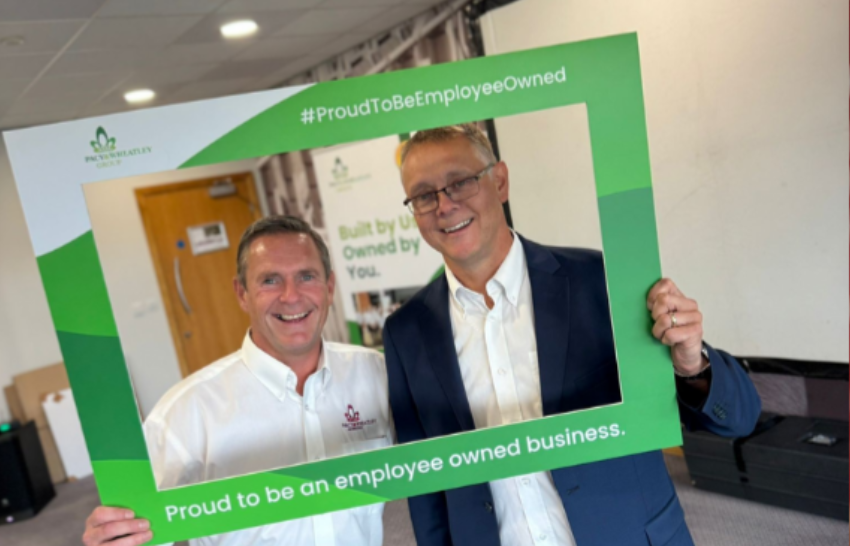
Another regional construction company becomes worker-owned in Great Britain
"Doncaster, UK, January 15, 2026. Doncaster-based Pacy & Wheatley is one of the UK's oldest family-owned construction groups. The company undertakes large-scale building projects across a range of sectors, including care homes and commercial and residential developments. Its specialist acoustics division works with global brands, while its interiors division executes major interior design contracts for leading retail chains, hospitals, and national storage solution providers."
Following a cooperative law dictated by the ICA, the Portuguese state abandons its support for cooperatives
Since Costa passed a cooperative law dictated by the ICA, eliminating worker cooperatives, and imposed the discourse of the "Social Economy" as an alternative to the centrality of worker-owned cooperatives, this prospect was inevitable, and we denounced it as such. Portugal needs its own maximalist cooperative movement.
The rise of worker cooperatives in the US
In the US, worker cooperatives have grown by 34% since 2020 and have more than doubled their number of workers. There are now over 1,300 cooperatives with 16,000 workers.
Puerto Rico now claims to be the root of the American cooperative movement and highlights the value of its legislation compared to the Spanish model.
“We had the first cooperative in America,” he says. “Cooperatives came to Puerto Rico thanks to the Spanish, and Catholics created a cooperative in every municipality. Now, on my way to take my children to school, I pass by about 20 cooperatives. They’re everywhere. Here, you can’t grow up without knowing that cooperatives exist.”
Puerto Rico now claims to be the root of the American cooperative movement and highlights the value of its legislation compared to the Spanish model.
“We had the first cooperative in America,” he says. “Cooperatives came to Puerto Rico thanks to the Spanish, and Catholics created a cooperative in every municipality. Now, on my way to take my children to school, I pass by about 20 cooperatives. They’re everywhere. Here, you can’t grow up without knowing that cooperatives exist.”
The business succession crisis in Canada and the purchase of companies by their employees
According to the Canadian Federation of Independent Businesses, 76% of Canadian small business owners plan to sell their businesses in the next decade, most to retire. Approximately $2 trillion in business assets could change hands. However, only 10% of these owners have a succession plan. Some businesses will close, others will be sold to management, to a third party, or acquired by private equity. The magnitude of this shift could significantly affect the country's business landscape and have a lasting impact on Canadian workers and communities.
New York cooperative
New York City has a "Worker Cooperative Business Development Initiative" that assists and funds the transition from capital ownership to labor ownership. Thanks to this, Brooklyn has not lost its bike shop and workshop. The opening of this new cooperative phase was a huge neighborhood celebration with local media and politicians in attendance.
Harvard Business Review on why worker ownership is worthwhile for companies and their shareholders
"While widespread ownership is not new, a recent boom led by private equity has transformed it into a powerful economic force. Since 2022, more than $1.3 billion has been distributed to 41,000 non-executive employees, with projections exceeding $20 billion over the next decade."
"The payoff is mutual. Preliminary data from the nonprofit organization Ownership Works shows that operations with ownership programs achieved a return on invested capital (ROIC) 1.6 times higher than the market median. These programs drive operational improvements, from expanding margins to reducing employee turnover, by unlocking the code of the ownership mindset."
Another example of a regional construction company being taken over by its workers
Not a day goes by without a leading company in a US state being bought by its own workers, who gain not only a voice and a vote, but also control of the results and a retirement plan unaffordable by other means.
The company, founded in 1983, stated that it is now structured as an Employee Social Participation Plan (ESOP), which grants eligible team members a stake in the company in addition to existing retirement benefits. Advanced Roofing indicated that this change is designed to strengthen shared responsibility across the organization, from field teams to project managers and support staff, while maintaining leadership and daily operations.
“This milestone seeks to secure the future of the company and honor those who built it,” said Rob Kornahrens, founder and CEO of the Advanced family of companies. “Employee ownership allows us to stay true to our identity: independent, customer-centric, and committed to long-term relationships.”
The company, founded in 1983, stated that it is now structured as an Employee Social Participation Plan (ESOP), which grants eligible team members a stake in the company in addition to existing retirement benefits. Advanced Roofing indicated that this change is designed to strengthen shared responsibility across the organization, from field teams to project managers and support staff, while maintaining leadership and daily operations.
“This milestone seeks to secure the future of the company and honor those who built it,” said Rob Kornahrens, founder and CEO of the Advanced family of companies. “Employee ownership allows us to stay true to our identity: independent, customer-centric, and committed to long-term relationships.”