@maximalism@maximalism.blog
Maximalism
Work, technology, and community for a society of abundance
In a village in the extreme southwest of Europe, we are building a community that combines free knowledge, cooperatives, open technology, and rural repopulation. Around the Juan Urrutia Library—driven by the Center for Maximalist Studies, the Maximalist Company S.Coop., and the Repopulation Foundation—an ecosystem is taking shape where living, working, and learning are all part of the same project. We invite you to get to know us, to become a part of it, and... to contribute.
How are trade unions being redefined in cooperative companies in France?
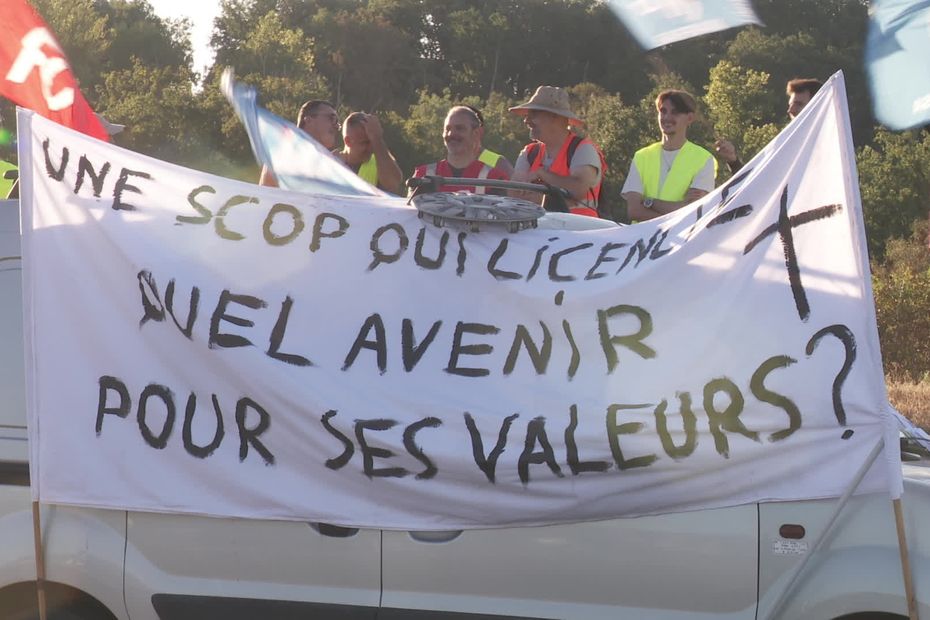
“For the CGT, in these companies acquired by cooperatives, it is often the cooperative itself, which has saved jobs, that must be defended. The failure to recognize the divisions that affect wage earners hinders the political subjectivity of subordinate workers and can lead to disengagement from activism. In fact, this devalues certain union practices that were previously valued in the workplace, such as confronting the boss or management, which provided social recognition for workers. Material demands are also devalued in this context, and different wage relationships are imposed based on one's position in the production process. The demand for a wage increase, important for subordinate workers, is less so for union leaders and managers, who prioritize defending the cooperative.”
New cooperative group in Alava
Six industrial cooperatives in Álava, employing over 1,500 workers, have joined together to form the Batera association. The network includes RPK, i+Med, Udapa, Loramendi, Aurrenak, and Goros. They aim to "combine their capabilities to strengthen the cooperative model as an engine of economic and social development in the region."
The contradictions of Mondragón seen from the perspective of the US "Social Economy"
"As Mondragón has transformed its regional economy, its worker-members have faced real challenges in upholding cooperative principles. This includes the hiring of non-owner wage earners and the establishment of non-cooperative subsidiaries outside of Spain, according to a report by researchers Ignacio Bretos and Anjel Errasti."
"These challenges will affect the United States even more severely, where almost every way people meet their needs (food, energy, health care) depends on extraction from other parts of the world."
The contribution of worker cooperatives in Spain
"Worker cooperatives represent around 77% of the new cooperatives created in the last decade, consolidating themselves as the main avenue for collective self-employment in Spain. Cooperatives integrate women, young people and people with lower levels of qualification to a greater extent, and have a greater presence in rural areas and intermediate cities, contributing to territorial cohesion and the fight against depopulation."
The Great American Dating Recession
A recent survey of young adults by the Institute for Family Studies and the Wheatley Institute at Brigham Young University found that only 30 percent of respondents were actively dating, even though roughly half of them indicated they were interested in finding a relationship. They cited a lack of confidence in what researchers termed "dating efficacy": fewer than 40 percent believed they were attractive to potential partners or felt comfortable discussing their feelings with them. Only about a quarter felt confident approaching a potential partner or in their ability to remain positive after a dating setback—a rejection, a bad date, or a breakup. If trends continue, one in three adults currently in their 20s and 30s will never marry, contributing to an epidemic of loneliness that is already generationally acute.
Salmon Farming EOT in Glasgow
Under the EOT structure, the company is now owned by a trust that holds the shares on behalf of all employees. Day-to-day operations will continue to be managed by the current leadership team. CEO Mary Bisset will remain at the helm, having been with the company for over 20 years and serving as CEO for eight years.
She stated, "This is a positive step for Marine Products. We wanted an ownership model that would protect the company's legacy while also providing the best possible platform for the future."
Employee ownership achieves precisely that: it maintains the company's independence, enables long-term decision-making, and recognizes that our people are fundamental to our success. Employees know this company best, and this structure puts them at the heart of protecting its future.
She stated, "This is a positive step for Marine Products. We wanted an ownership model that would protect the company's legacy while also providing the best possible platform for the future."
Employee ownership achieves precisely that: it maintains the company's independence, enables long-term decision-making, and recognizes that our people are fundamental to our success. Employees know this company best, and this structure puts them at the heart of protecting its future.
There is no community without a dog, and there's a reason for that.
Studies show that owning a pet is associated with lower blood pressure, a reduced risk of cardiovascular disease, and lower mortality rates following a heart attack or stroke. Furthermore, a comprehensive review of studies published in 2019 revealed that owning a dog was associated with a 24% lower risk of dying from any cause within 10 years.
AI, cybersecurity, and the assassination of Khamenei
“Nearly all of Tehran’s traffic cameras had been hacked for years, their images encrypted and transmitted to servers in Tel Aviv and southern Israel, according to two people familiar with the matter. One camera had an angle that proved particularly useful, one of the people said, allowing them to determine where the men liked to park their personal cars and providing a window into the workings of a mundane part of the zealously guarded complex. Complex algorithms added details to the files of these security guards, including their addresses, working hours, the routes they took to get to work, and, most importantly, whom they were typically assigned to protect and transport, creating what intelligence officers call a ‘life pattern.’”
Can cooperatives help to turn around a dysfunctional economy? Some economists think so.
"We begin with the obvious reality that some sectors of the modern economy no longer generate public benefits. I mentioned the technology monopolies that now dominate communications and information. They depend on our data, our labor, our creativity, and yet they operate outside of any meaningful democratic control. They shape policy, distort markets, and extract rents from society without providing proportionate value."
John's point was that this outcome is not accidental. It stems from the way capitalism has been structured over the last half-century. The modern corporation is designed to maximize shareholder returns. This idea was reinforced by economists like Milton Friedman and Michael Jensen, who insisted that directors have no responsibility beyond profits. Once this doctrine is accepted, everything else follows: wage cuts, investment reductions, the creation of monopolies, and the relentless pursuit of short-term gains.
That's capitalism as we know it now. And it doesn't work.
But what struck me most about our conversation was how quickly we moved from criticism to alternatives. John reminded us that cooperatives and mutual societies are not a fringe curiosity. They have existed for centuries, and modern cooperative movements were born here in Britain. Thinkers like Robert Owen and John Stuart Mill saw them as practical ways to combine efficiency and equity.
John's point was that this outcome is not accidental. It stems from the way capitalism has been structured over the last half-century. The modern corporation is designed to maximize shareholder returns. This idea was reinforced by economists like Milton Friedman and Michael Jensen, who insisted that directors have no responsibility beyond profits. Once this doctrine is accepted, everything else follows: wage cuts, investment reductions, the creation of monopolies, and the relentless pursuit of short-term gains.
That's capitalism as we know it now. And it doesn't work.
But what struck me most about our conversation was how quickly we moved from criticism to alternatives. John reminded us that cooperatives and mutual societies are not a fringe curiosity. They have existed for centuries, and modern cooperative movements were born here in Britain. Thinkers like Robert Owen and John Stuart Mill saw them as practical ways to combine efficiency and equity.
Negotiations between Anthropic and the US military break down
Shortly after Trump's announcement, and 13 minutes after the Pentagon's deadline, Defense Secretary Pete Hegseth designated the company a "supply chain and national security risk." This designation means that no contractor or supplier working with the military can do business with Anthropic. Later on Friday, OpenAI, the creator of ChatGPT, announced that it had reached an agreement with the Department of Defense to provide its AI technology for classified systems.
In a statement, Anthropic asserted, “We maintained our exceptions for two reasons. First, we do not believe that current cutting-edge AI models are reliable enough to be used in fully autonomous weapons. Allowing current models to be used in this way would endanger American combatants and civilians. Second, we believe that mass surveillance of Americans at home constitutes a violation of fundamental rights.”
The number of employee-owned businesses is growing steadily in the US.
According to a report from the Department of Labor to the US Congress:
Employee ownership is present in every state in the country, with ESOPs being the most widespread form. Worker cooperatives and employee-owned trusts, while few in number, are forming at a faster rate. Over the past half-century, the number of ESOPs has increased from a few hundred in 1975 to 6,525 plans in 2023. (3) Based on Form 5500 data filed for plan years ending in 2023 (the latest available), these plans cover more than 15 million participants and hold an estimated $2 trillion in assets (including company securities and other retirement plan assets). Large ESOPs (those with 100 or more participants) generated $160.6 billion in direct benefit payments in 2023.
Ending cooperative democracy
The Polish government's new housing cooperative bill mandates that all members of the Social Council hold a university degree. Anyone still expecting a protest, even a formal one from the ICA, can forget it. Official cooperatives are dominated by professionalized bureaucrats who find it perfectly acceptable to restrict the rights of cooperative members in favor of their peers on the path to professionalization.
The British trade press is beginning to reflect the results of the wave of companies that have become employee-owned in the last two years
The group recorded a 50% increase in turnover to £129 million in the year to June 2025 thanks to HS2's jobs, business and energy plans.
A backlog of £300 million (2024: £200 million) now supports the next phase of growth, giving the business strong visibility over the next year as it moves forward in the data center, transport and nuclear energy markets.
The improved performance resulted in £349,000 being distributed among all eligible employees in the fourth and highest profit-sharing payout since the transition to an employee-owned group in March 2021.
A backlog of £300 million (2024: £200 million) now supports the next phase of growth, giving the business strong visibility over the next year as it moves forward in the data center, transport and nuclear energy markets.
The improved performance resulted in £349,000 being distributed among all eligible employees in the fourth and highest profit-sharing payout since the transition to an employee-owned group in March 2021.
A scenario about the impact of AI on a "white collar" economy
Throughout modern economic history, human intelligence has been the scarce input. Capital was abundant (or at least replicable). Natural resources were finite, but replaceable. Technology improved slowly enough for humans to adapt. Intelligence—the capacity to analyze, decide, create, persuade, and coordinate—was what could not be replicated on a large scale.
Human intelligence derived its inherent value from its scarcity. All the institutions of our economy, from the labor market to the mortgage market and the tax code, were designed for a world in which that premise held true.
We are now witnessing the erosion of that premium. Artificial intelligence has become a competent and rapidly improving substitute for human intelligence in an ever-expanding range of tasks. The financial system, optimized for decades for a world with scarce human minds, is being revalued. This revaluation is painful, messy, and far from complete.
But revaluation is not the same as collapse.
The economy can find a new equilibrium. Achieving this is one of the few tasks that only humans can accomplish. We need to do it right.
This is the first time in history that the economy's most productive asset has generated fewer jobs, not more. No framework fits, because none were designed for a world where a scarce input has become abundant. Therefore, we have to create new frameworks. The only question that matters is whether we build them in time.
Human intelligence derived its inherent value from its scarcity. All the institutions of our economy, from the labor market to the mortgage market and the tax code, were designed for a world in which that premise held true.
We are now witnessing the erosion of that premium. Artificial intelligence has become a competent and rapidly improving substitute for human intelligence in an ever-expanding range of tasks. The financial system, optimized for decades for a world with scarce human minds, is being revalued. This revaluation is painful, messy, and far from complete.
But revaluation is not the same as collapse.
The economy can find a new equilibrium. Achieving this is one of the few tasks that only humans can accomplish. We need to do it right.
This is the first time in history that the economy's most productive asset has generated fewer jobs, not more. No framework fits, because none were designed for a world where a scarce input has become abundant. Therefore, we have to create new frameworks. The only question that matters is whether we build them in time.
Forbes on the wave of employee buyouts
This Forbes article marks a paradigm shift in the American business press by elevating employee ownership from a niche topic to a central discussion in the business world, questioning why it isn't a more universally adopted option. It signals a break from the perception of employee ownership as a fringe alternative, positioning it instead as a viable strategic solution to various business challenges.